Sightseeing
Gossnerhaus with fountain courtyard
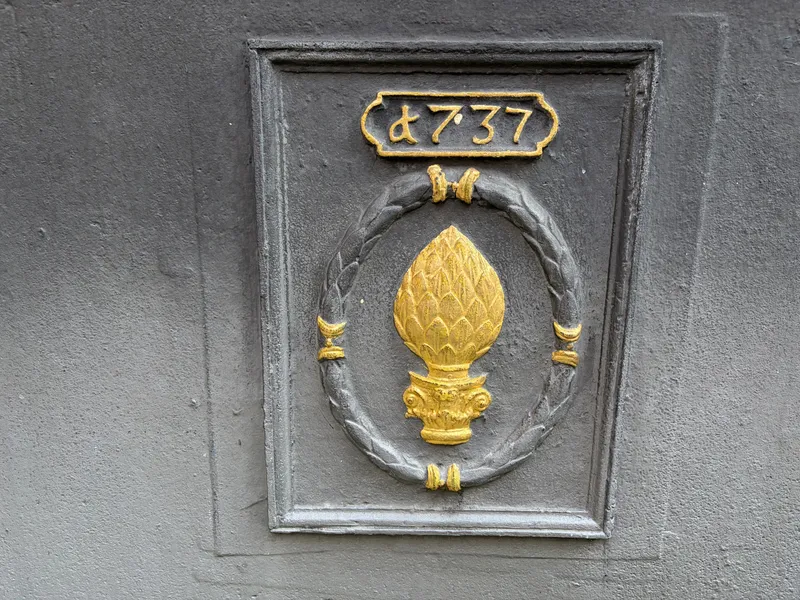
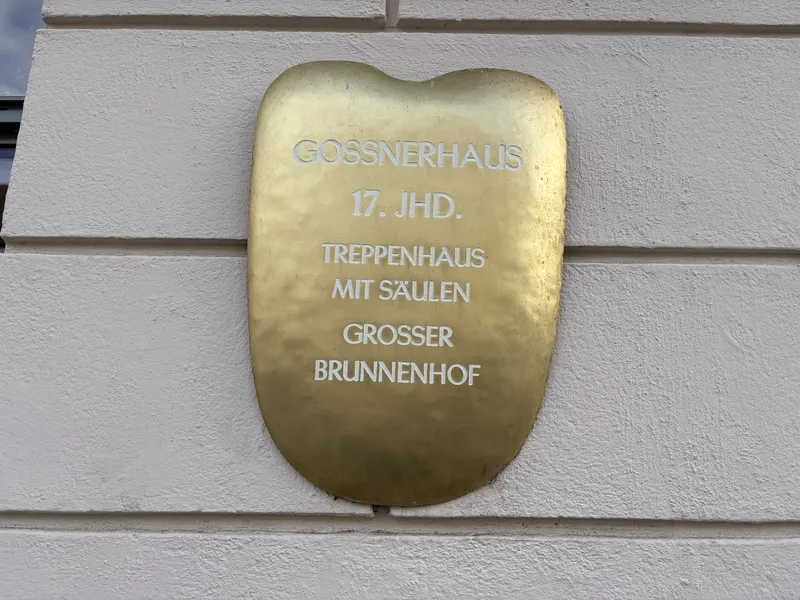
The Gossnerhaus stands at Maximilianstraße 65, on the south side of the grand avenue. A golden plaque on the facade names three things: the 17th century, a staircase with columns and the Große Brunnenhof (great fountain courtyard). In the courtyard stands a cast-iron fountain basin with the year 1737 and a golden pine cone.
At a glance
Address: Maximilianstraße 65, 86150 Augsburg. The house is a listed building (number D-7-61-000-663): a townhouse, probably dating back to the 17th century at its core, with a neoclassical facade. The fountain in the courtyard is protected along with it as a cast-iron fountain from 1737. As of October 2026.
- Year on the cast-iron fountain basin
- 1737
- Core of the house according to the monument list and the plaque
- 17th c.
The house
The monument list describes the house as a three-storey building with a gabled roof, a neoclassical facade and a core that probably dates from the 17th century. That fits the plaque on the facade. Who built the house and exactly when is not recorded in the sources we checked.
What is certain: the Gasthof „Zur Goldenen Krone“ used to stand on this spot. The merchant Johann Baptist Schger owned the house between 1730 and 1770 and had the painter Johann Georg Bergmüller paint the facade. From 1849 the banking house Friedrich Schmid & Co. was based here. We could not find out where the name Gossnerhaus comes from.
The fountain courtyard
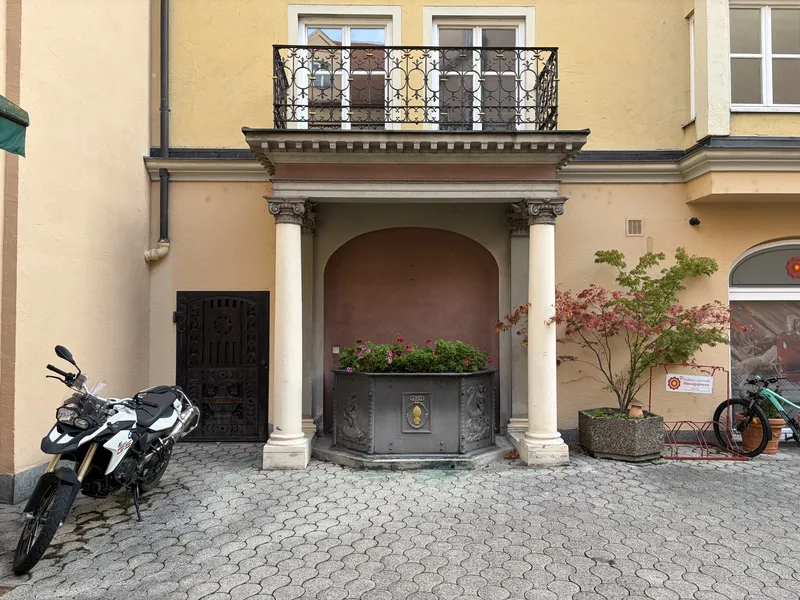
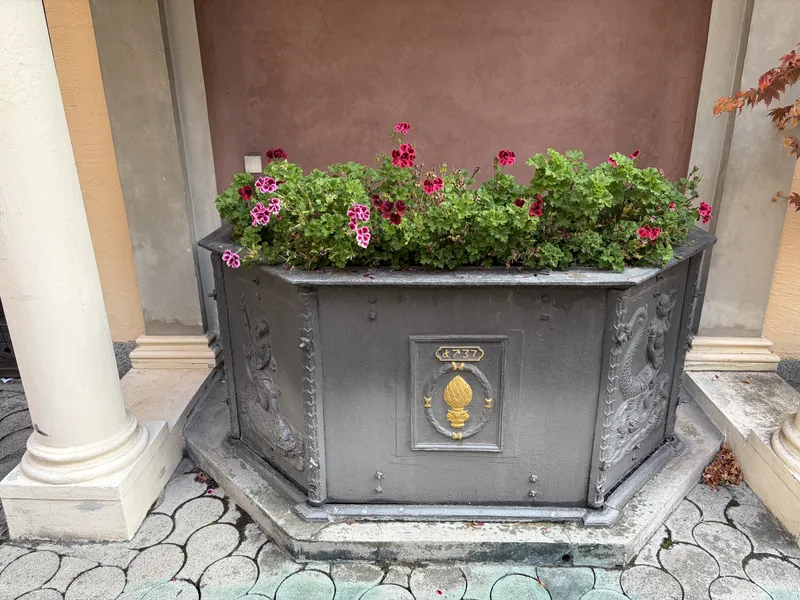
Behind the house lies a paved courtyard. A balcony with a wrought-iron railing rests on two columns with capitals. In the niche behind stands the fountain basin made of grey cast iron, now planted with geraniums. Its sides carry reliefs. At the front is a plaque with the year 1737, and below it a laurel wreath with a golden cone figure on a capital.
The cone is the pine cone, also called Stadtpyr in Augsburg. It is the city's heraldic emblem. The idea that it goes back to the standard of the Roman legion is considered a widespread mistake. It crowned Roman pillar tombs that were excavated in Augsburg. It probably only found its way into the city's coat of arms in the Renaissance.
The staircase with columns mentioned on the plaque also belongs to the house. We could not see it and therefore do not describe it.
Visit
The courtyard lies behind the house. A city guide page describes a cast-iron wall fountain from 1737 in the „Musikhof“ of Maximilianstraße 65 as „accessible“; it lies on a passage between Maximilianstraße and Dominikanergasse. We did not find any official opening hours. A medical practice sign hangs in the courtyard, so it is not a courtyard just for visitors. Walk through quietly and stay in the courtyard.
- Admission: free as long as the courtyard is open (as of October 2026, no official hours known)
- Geraniums grow in the fountain basin, we did not see any water
- You can only see the staircase when the house is open
Maximilianstraße
The Gossnerhaus is one of the townhouses of Maximilianstraße. Just a few steps away stands the Herkulesbrunnen, one of the street's three grand fountains. Opposite lies the Schaezlerpalais.
Location
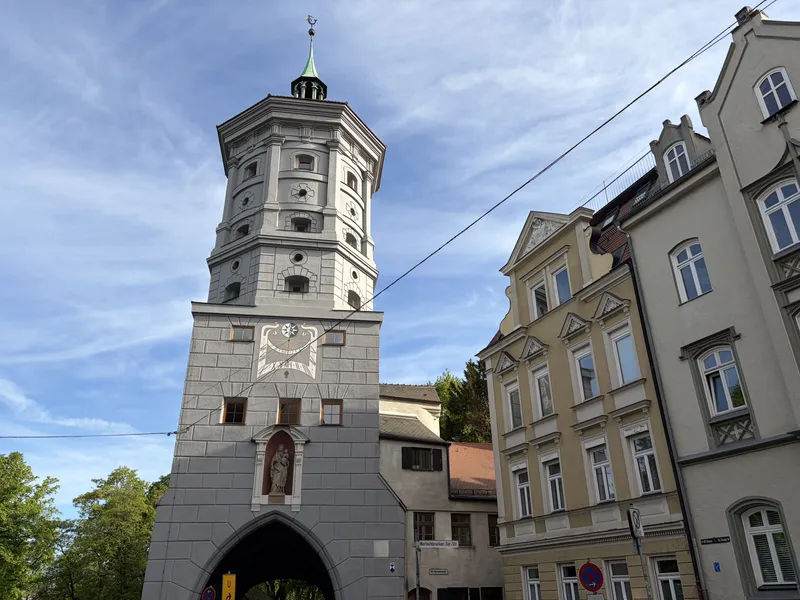
City wall and city gates: discover Augsburg’s fortifications
From the Wertachbrucker Tor and the Vogeltor to the Lueginsland bastion: find out where Augsburg still has remains of its old fortifications and what they tell us.
Read more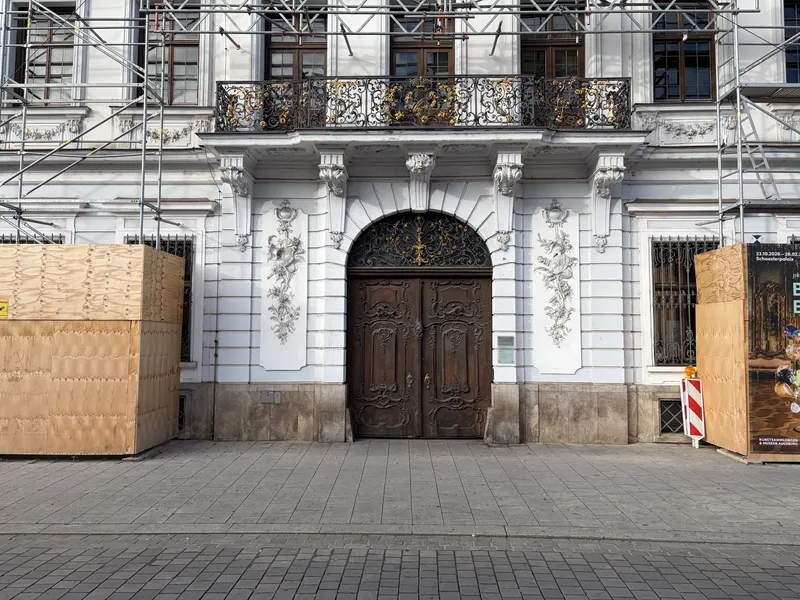
Schaezlerpalais
The Rococo palace on Maximilianstraße with its magnificent ballroom and the Deutsche Barockgalerie.
Read more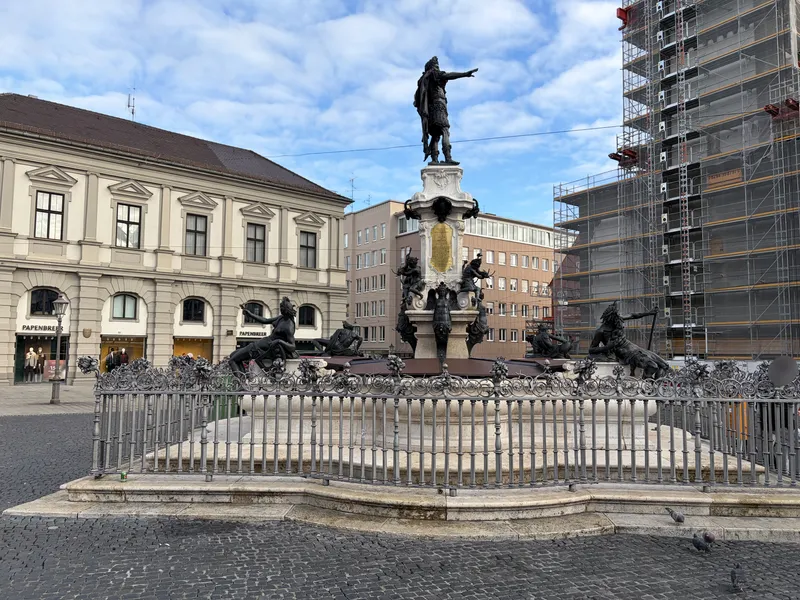
The three Prachtbrunnen
Augustusbrunnen, Merkurbrunnen and Herkulesbrunnen: three bronze fountains from around 1600 on Maximilianstraße, part of the UNESCO World Heritage since 2019.
Read more