Sightseeing
The three Prachtbrunnen
Around 1600 the wealthy imperial city of Augsburg had three bronze fountains built along what is now Maximilianstraße: the Augustusbrunnen on the Rathausplatz, the Merkurbrunnen in front of the church of St. Moritz and the Herkulesbrunnen further south. You can see them one after another on a short walk. Since 2019 they have been part of the UNESCO World Heritage site „Augsburg Water Management System“.
At a glance
The three fountains stand outdoors on Maximilianstraße and are accessible free of charge at any time. The way from the Augustusbrunnen to the Herkulesbrunnen is less than 500 m long. The bronze figures on the fountains are recasts; the originals stand in the Maximilianmuseum.
- Fountains of bronze and marble
- 3
- Construction and installation
- 1589 to 1602
- UNESCO World Heritage
- 2019
Three fountains for three estates
According to a common interpretation, the fountains stand for the three estates of the city: the Augustusbrunnen for the patricians, the Merkurbrunnen for the merchants and the Herkulesbrunnen for the craftsmen. They were both drinking fountains and running fountains. The water came via the Kastenturm of the waterworks at the Rotes Tor. From about 1713 they mainly served as show fountains.
The sculptors came from the Netherlands: Hubert Gerhard made the models for the Augustusbrunnen, Adriaen de Vries those for the Merkur- and Herkulesbrunnen. The bronzes were cast in Augsburg, the Augustusbrunnen by Peter Wagner, the other two by Wolfgang Neidhardt.
Augustusbrunnen
The Augustusbrunnen stands at the northern end of Maximilianstraße on the Rathausplatz, in front of the Perlachturm and the town hall. At the top of the column stands Emperor Augustus, the namesake of the city, with his arm outstretched. At the edge of the basin sit the bronze figures of the four waters Lech, Wertach, Singold and Brunnenbach. Small putti and winged figures sit on the column, and golden plaques carry inscriptions.
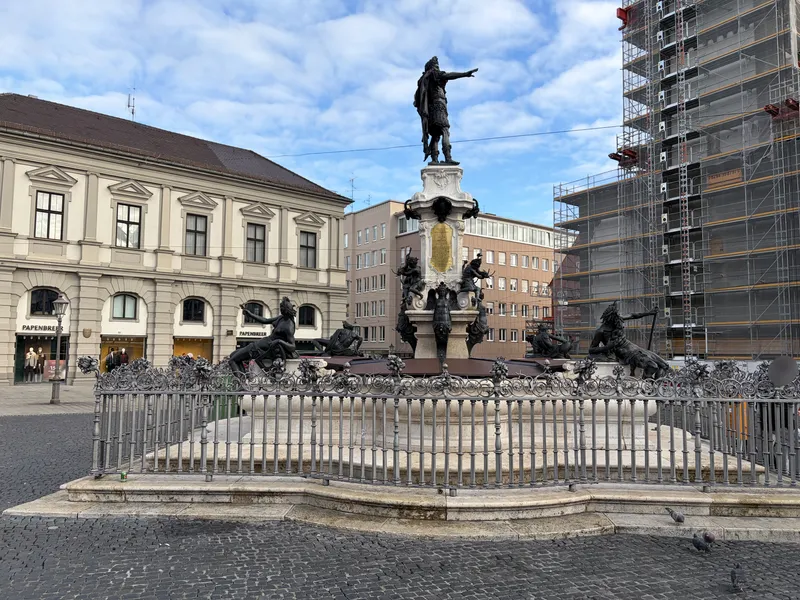
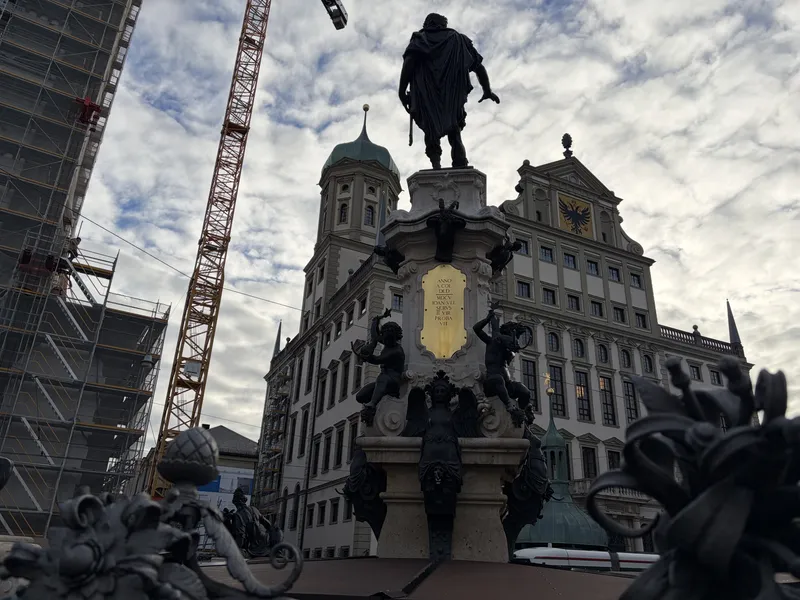
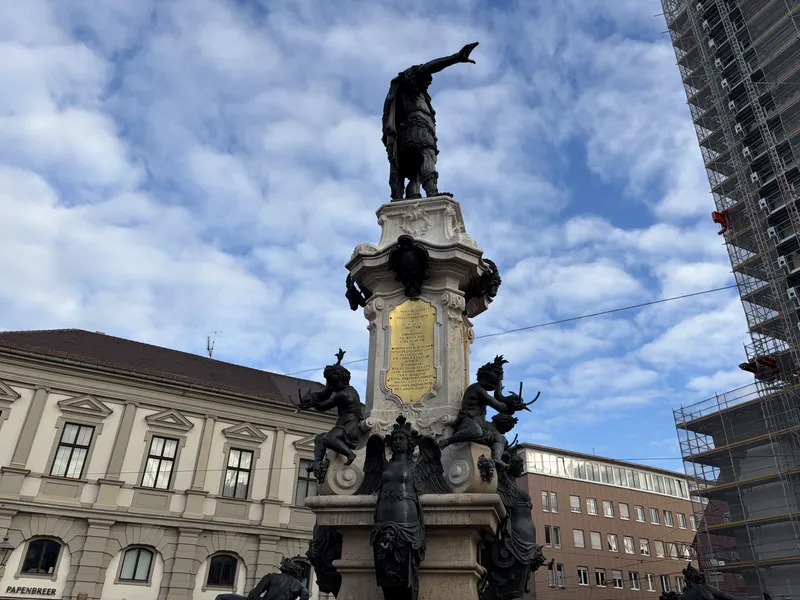
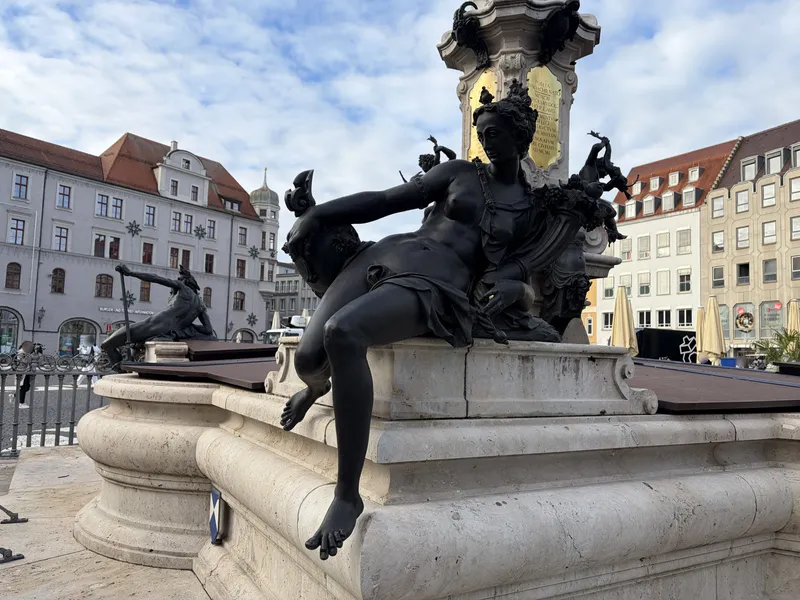
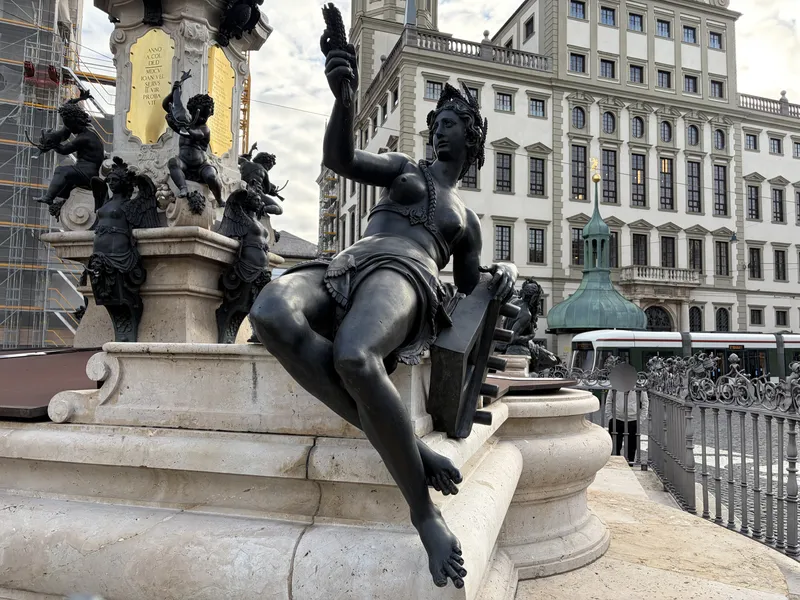
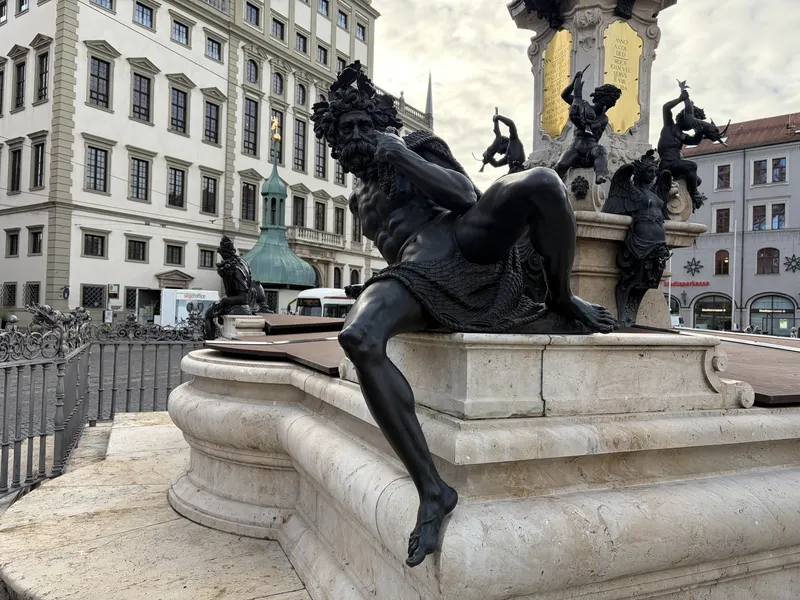
The fountain was built from 1589 to 1594. The column was renewed in 1749 in the Rococo style. In the 1940s the figures were moved to storage and came back in 1950. After damage during a celebration in 2014, the city replaced the figures with copies, finished in 2018. The original of Augustus stands in the Maximilianmuseum.
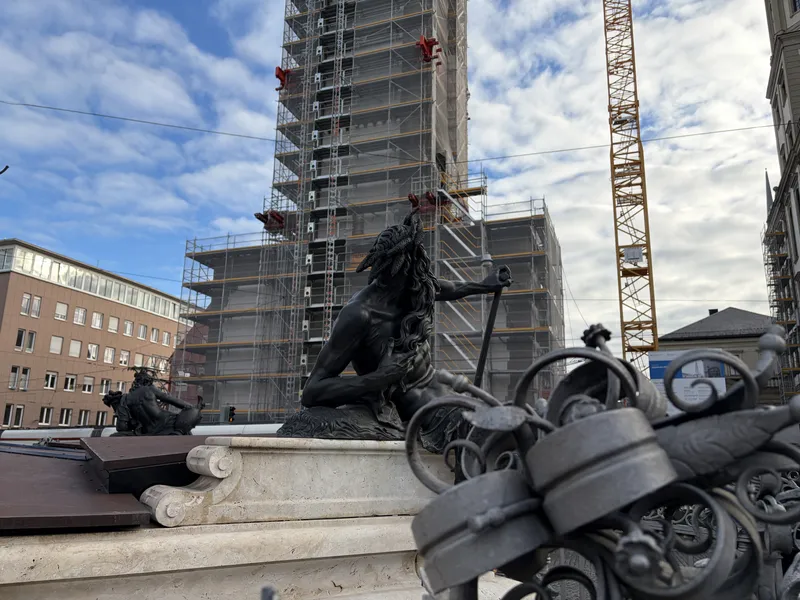 © Visit Augsburg • visitaugsburg.info · CC BY 4.0
Merkurbrunnen
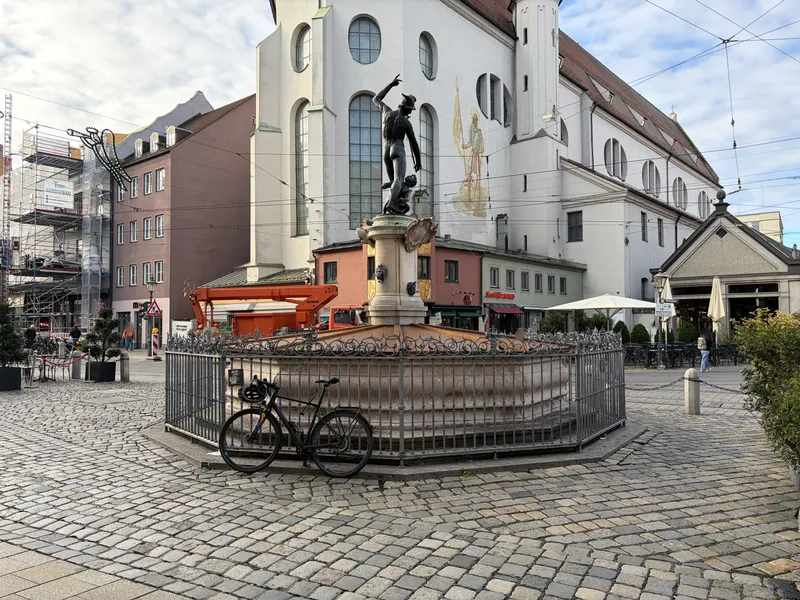
The Merkurbrunnen stands on Maximilianstraße in front of the church of St. Moritz. Mercury is the god of trade, so the figure stands for the merchants. He wears a winged helmet and carries a serpent staff, and a winged Cupid fiddles with his shoe. The fountain was built from 1596 to 1599, and the column was renewed in 1752. The original of the bronze group has stood in the Maximilianmuseum since 2001.
Herkulesbrunnen
The Herkulesbrunnen stands in the middle of Maximilianstraße, in front of the registry office and the Schaezlerpalais. At the top Hercules slays the seven-headed Hydra. Further down sit three naiads, three sea gods and three putti with geese, from which water spouts. The bronzes were made around 1600, and the fountain was set up in 1602 on what was then the Weinmarkt. The original of Hercules also stands in the Maximilianmuseum.
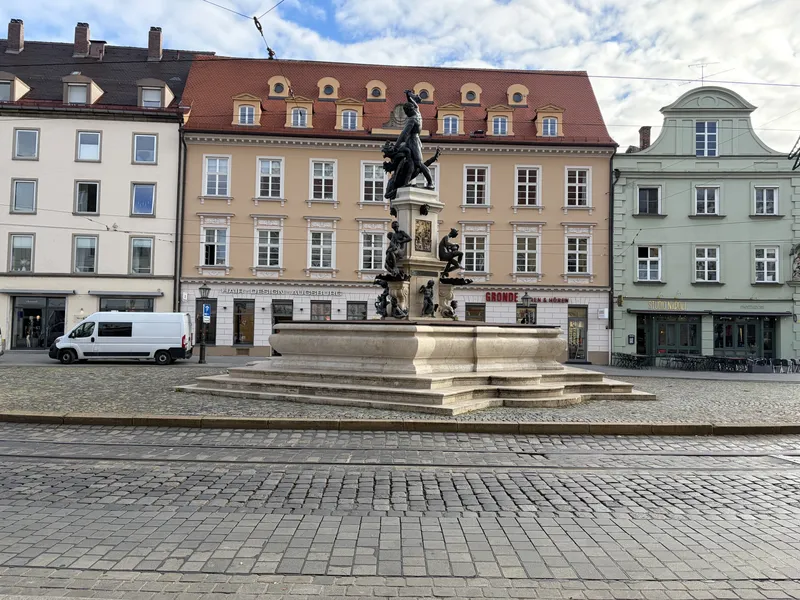
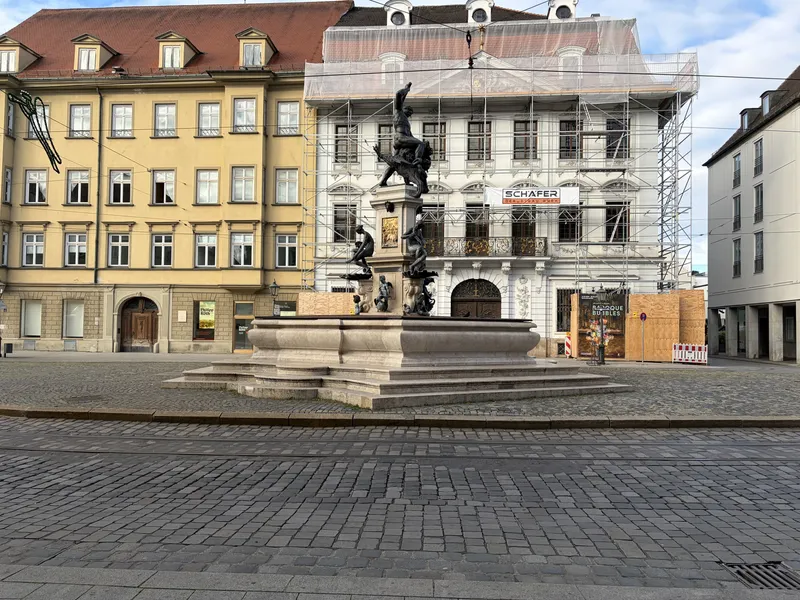
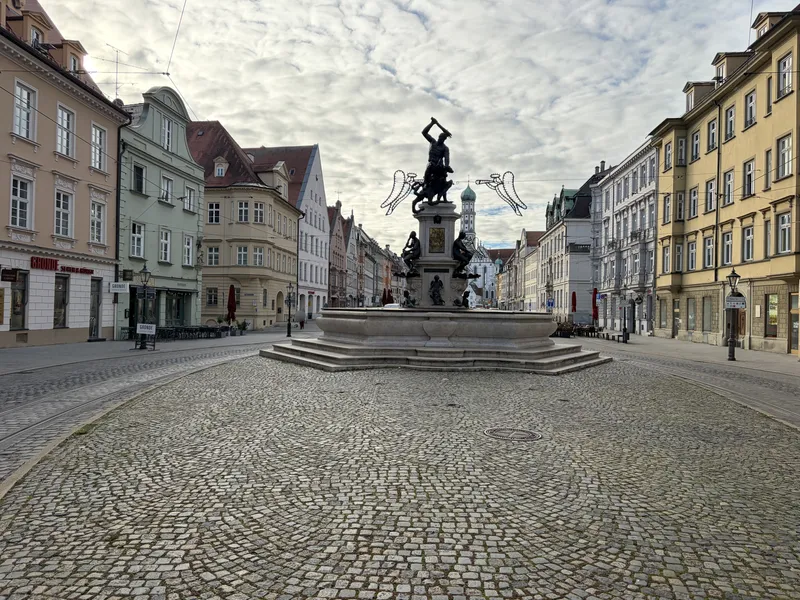
Water and World Heritage
The fountains are part of the Augsburg Water Management System, which was recognised as a UNESCO World Heritage site in 2019. It comprises 22 objects, from the waterworks at the Rotes Tor to the canals. The Prachtbrunnen show how important water was for the city.
Timeline
1589 to 1594
Augustusbrunnen
Hubert Gerhard makes the models, Peter Wagner casts the bronzes.
1596 to 1599
Merkurbrunnen
Adriaen de Vries models, Wolfgang Neidhardt casts.
around 1600 to 1602
Herkulesbrunnen
The bronzes are finished around 1600, and the fountain is set up on the Weinmarkt in 1602.
2018
Copies at the Augustusbrunnen
The city replaces the figures with recasts; the originals go to the Maximilianmuseum.
2019
UNESCO World Heritage
The three fountains become part of the Augsburg Water Management System.
Visit
- The fountains stand outdoors, and you can see them at any time without admission.
- Start at the Rathausplatz with the Augustusbrunnen and walk south along Maximilianstraße to the Merkurbrunnen and the Herkulesbrunnen.
- The original bronzes stand in the covered courtyard of the Maximilianmuseum.
- In winter, according to the water system portal, the city protects the fountains with wooden covers. Whether and how they will be covered in winter 2026/27 has not been confirmed (as of October 2026).
Tours in the de Vries year
For the 400th anniversary of Adriaen de Vries's death, Regio Augsburg Tourismus GmbH offers the tour „Adriaen de Vries und Augsburg“, about 90 minutes. Dates: 27 November 2026 and 4 December 2026 at 3 pm, 12 December 2026 at 10:30 am and 6 January 2027 at 3 pm. The meeting point is the Tourist Info on the Rathausplatz (as of October 2026).
Location
What does it cost to visit the Prachtbrunnen?
Nothing. The fountains stand outdoors on Maximilianstraße.
Where can I see the original figures?
In the covered courtyard of the Maximilianmuseum. The figures on the fountains are recasts.
Who created the fountains?
Hubert Gerhard made the models for the Augustusbrunnen, Adriaen de Vries those for the Merkur- and Herkulesbrunnen. Both came from the Netherlands.
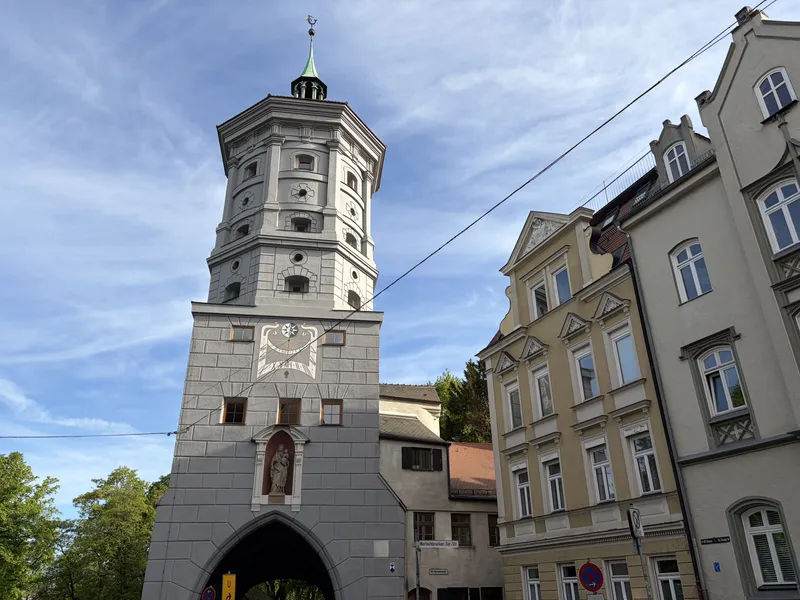
City wall and city gates: discover Augsburg’s fortifications
From the Wertachbrucker Tor and the Vogeltor to the Lueginsland bastion: find out where Augsburg still has remains of its old fortifications and what they tell us.
Read more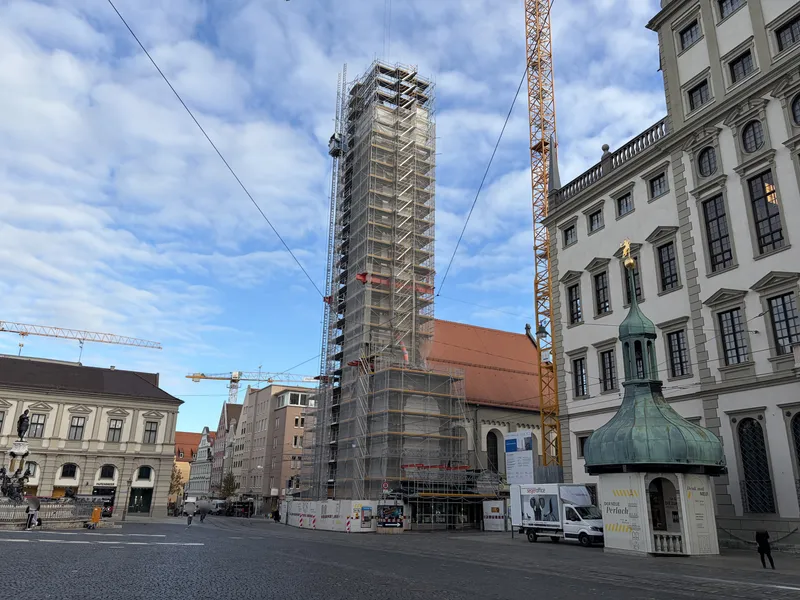
Perlachturm
The Perlachturm on the Rathausplatz is around 70 metres tall and is currently covered in scaffolding for renovation. Here is what you can see and do now.
Read more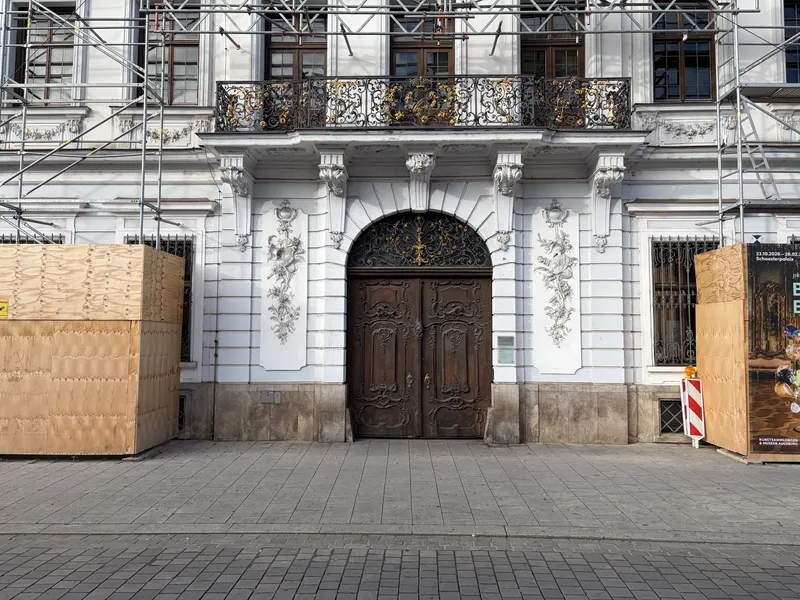
Schaezlerpalais
The Rococo palace on Maximilianstraße with its magnificent ballroom and the Deutsche Barockgalerie.
Read more