Sightseeing
City wall and city gates: discover Augsburg’s fortifications
For centuries, Augsburg was a fortress city. Much of the city wall with its gates, towers and bastions has disappeared, but on a walk around the old town you can still find impressive remains: medieval gate towers, long brick walls and the mighty Bastion Lueginsland.
At a glance
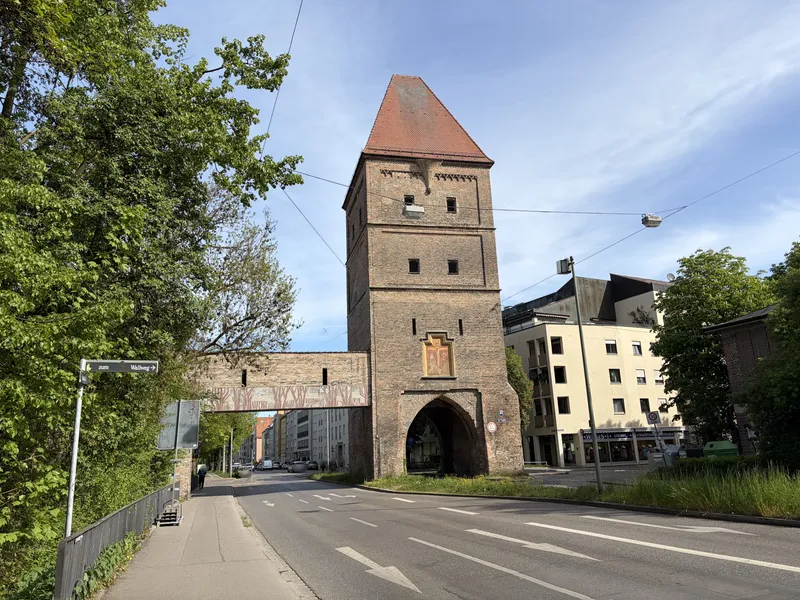
Of the original 15 large city gates, the Rotes Tor, the Wertachbrucker Tor, the Jakobertor and the Vogeltor are still standing today. You can look at the gates and walls from the outside for free, while the towers are usually only open on guided tours or on special opening days.
One city, several walls
Even the Romans protected their settlement with wooden palisades. In the Middle Ages, Bishop Ulrich replaced the palisades around the cathedral with a low stone wall. In the 12th century the Obere Stadt (upper town) received a stone wall with a deep moat, and the Untere Stadt (lower town) was walled in by 1308. Around 1450 the Jakobervorstadt followed with a brick wall, towers and gates.
- 1541 to 1545: Bastions are built at the corners of the city, as Nuremberg fortification engineers had recommended.
- 1605 to 1625: City master builder Elias Holl remodels most of the gate towers in the Renaissance style. Jakobertor and Vogeltor remain unchanged.
- 1632 to 1635: After the Swedes under King Gustav II Adolf capture the city, the fortifications are extended, above all in the east.
- 1704: After the siege by French-Bavarian troops, Elector Max Emanuel has parts of the wall torn down.
- 1866: Augsburg loses its status as a fortress and buys back the defences for 200,000 guilders. From 1867 the first sections of wall come down.
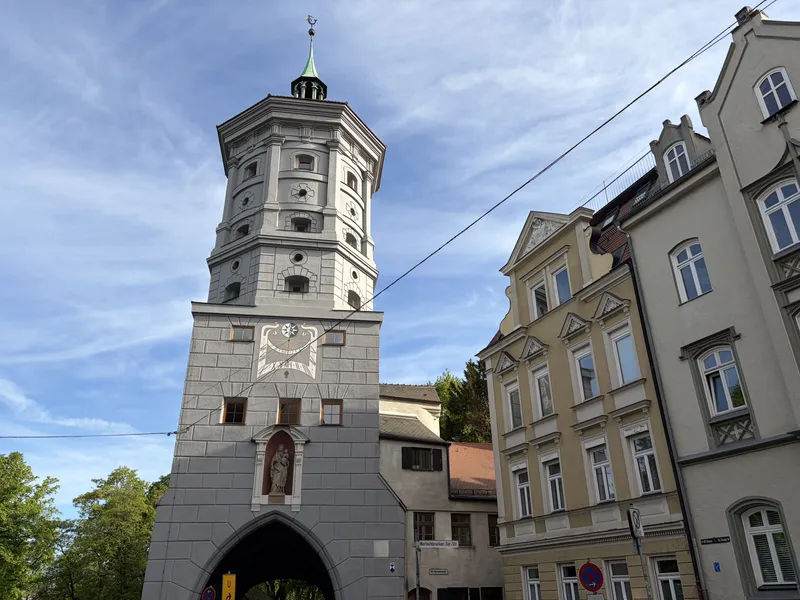
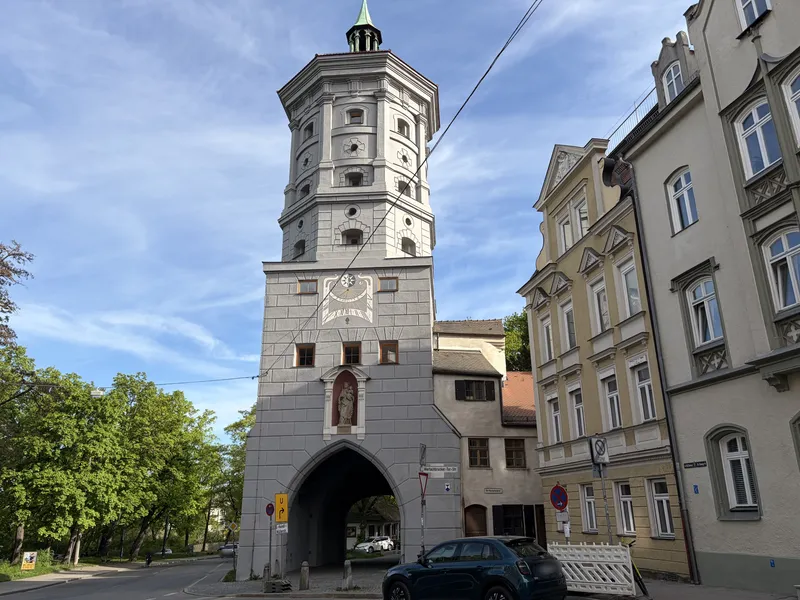
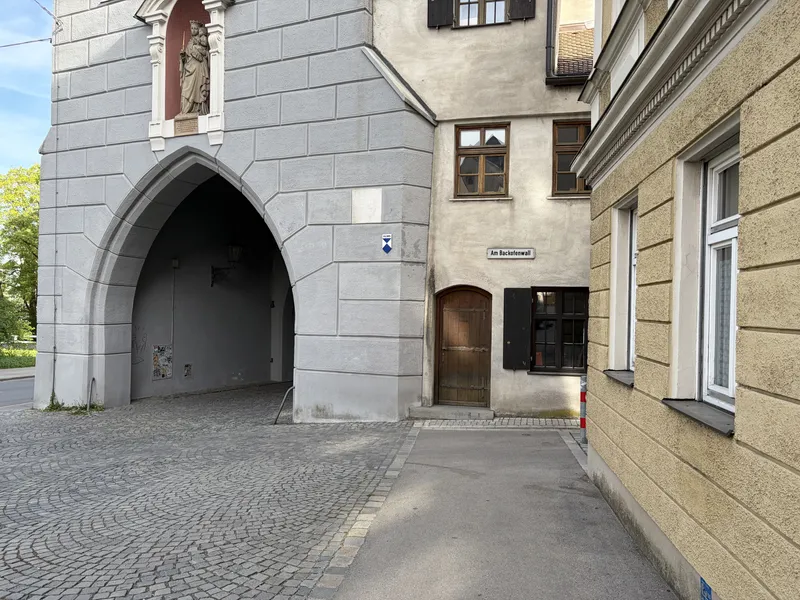
Wertachbrucker Tor
The Wertachbrucker Tor in the west of the old town was built around 1370, at first as a toll station and later as a defensive structure. In 1605 Elias Holl raised and altered the tower. During the Thirty Years' War the gate repelled attacks by Swedes and French, and in 1805 Napoleon entered the city here.
Today the tower is used by the carpenters' guild (Zimmerer-Innung), which renovated it in 1998. It has seven storeys, and at the very top is the Meisterstube (master's room) with a view over the city. The guild offers tower tours and events.
Vogeltor
The Vogeltor belongs to the fortifications of the Jakobervorstadt from around 1450 and remained unchanged during Elias Holl's remodelling. Right next to it, a waterworks stood from 1538 that supplied the Lechviertel with drinking water. In the 18th century a defensive tower was converted into a water tower, from 1843 a wooden water wheel drove the pumps, and in 1879 the waterworks was shut down.
The waterworks is part of Augsburg's water system, which is a UNESCO World Heritage Site. The water tower stands on private grounds and is not open to the public.
 © Visit Augsburg • visitaugsburg.info · CC BY 4.0
Bastion Lueginsland
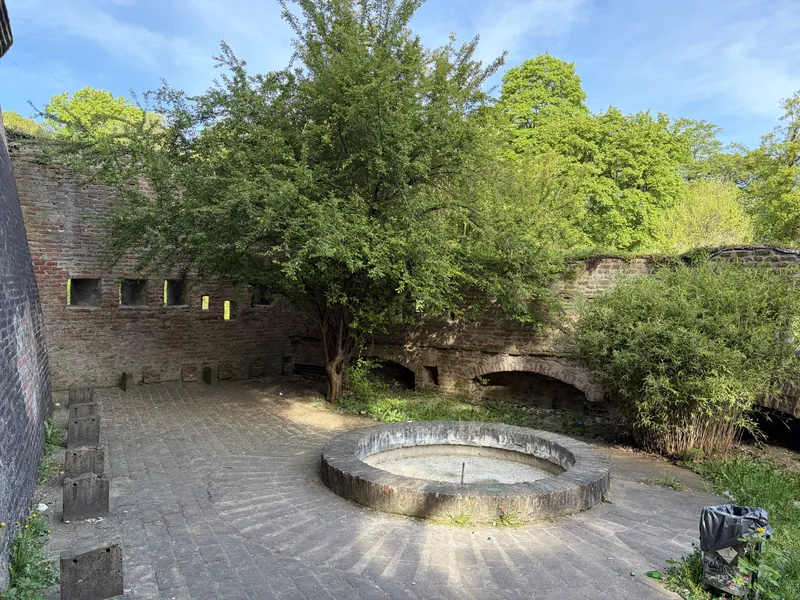
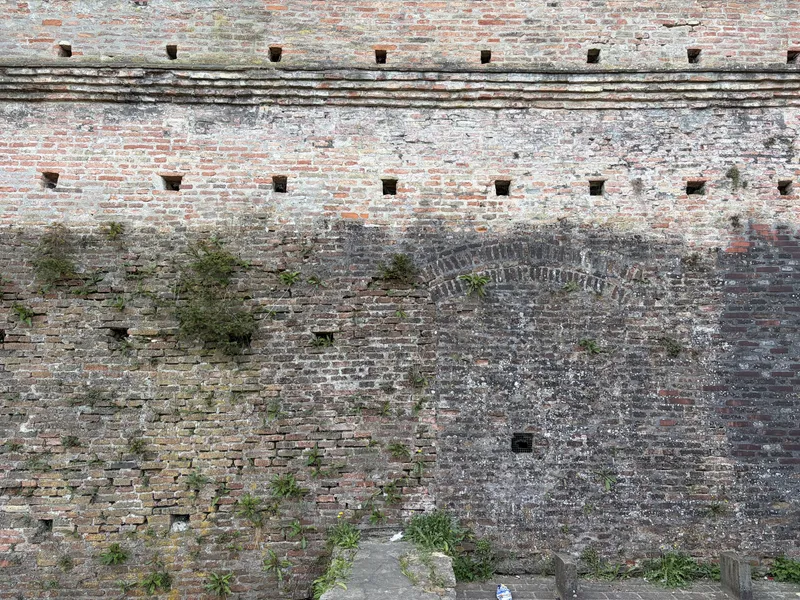
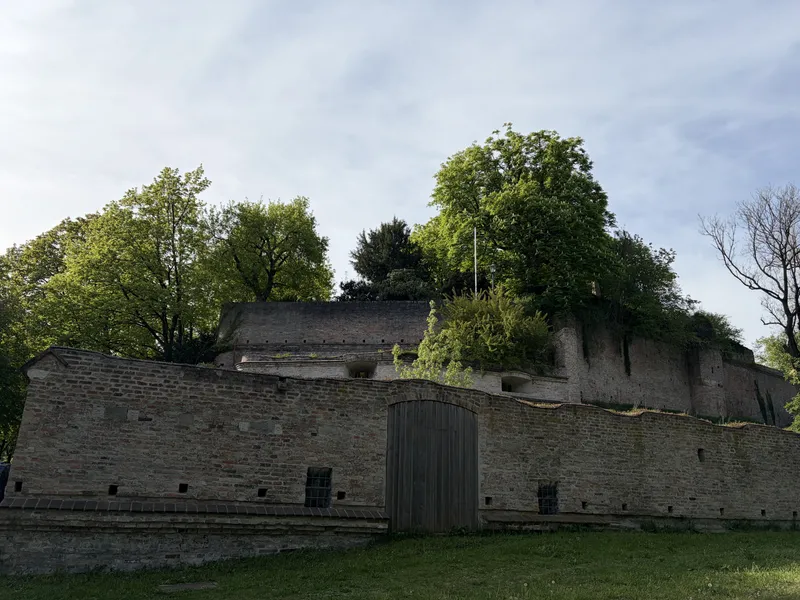
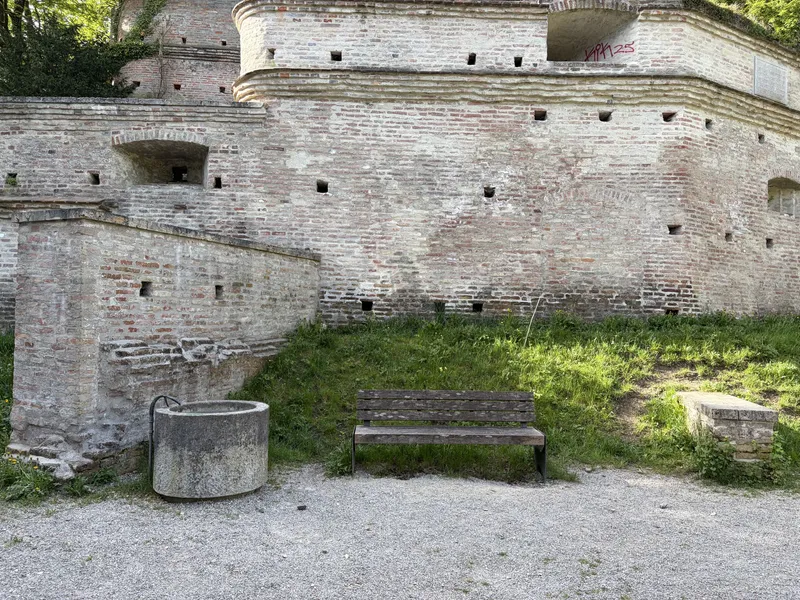
The name sounds like “look out over the land”: from 1430, on the advice of Emperor Sigismund, the city had an eight-storey observation tower built here, which was finished in 1438 and cost 6,000 guilders. In the 16th century the site was extended into a bastion, completed by 1553 and equipped with up to 21 cannons. Today it is the largest surviving fortification in the city.
After the fortress status ended in 1866, the bastion lost its purpose. From 1915 it was renovated and turned into a public green space. A beer cellar with shady chestnut trees was created on top, and it quickly became a popular destination for outings. Today you will find a small park here with a playground and the Hexenbrunnen (Witches' Fountain). Check whether the beer garden is open before you visit.
Schwedenstiege and Steinerner Mann
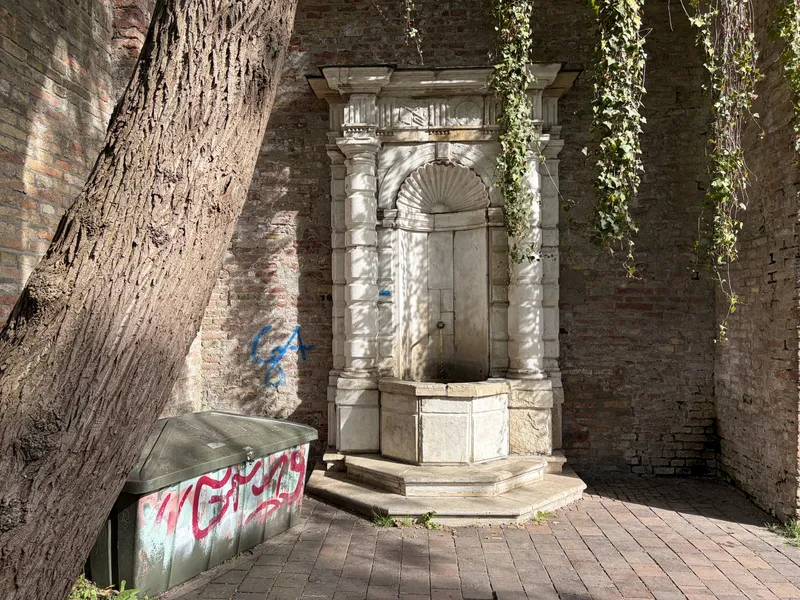
The Schwedenstiege (Swedes' Stairs) leads over the outer moat with 71 steps. The Swedes had it built after capturing the city in 1632. Right next to it is a wall fountain with a shell niche.
 © Visit Augsburg • visitaugsburg.info · CC BY 4.0
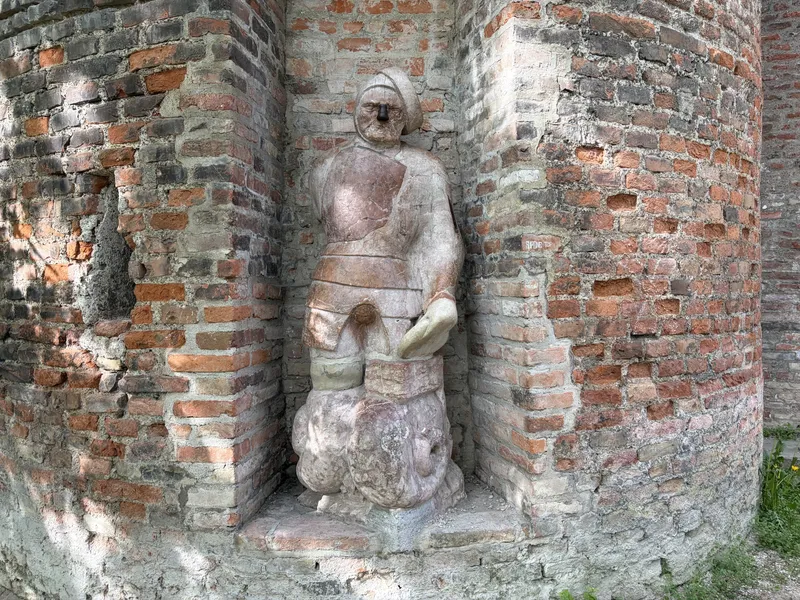
The Steinerner Mann (Stone Man) stands in a niche in the city wall. According to legend, the figure shows a master baker who is said to have saved the city in 1634: when the garrison, after a long siege, was already thinking of giving up, he threw the last loaf of bread over the wall, and the Swedes withdrew. This is not historically documented. Another source names the baker Konrad Hackherr, whom the figure was meant to commemorate in 1642.
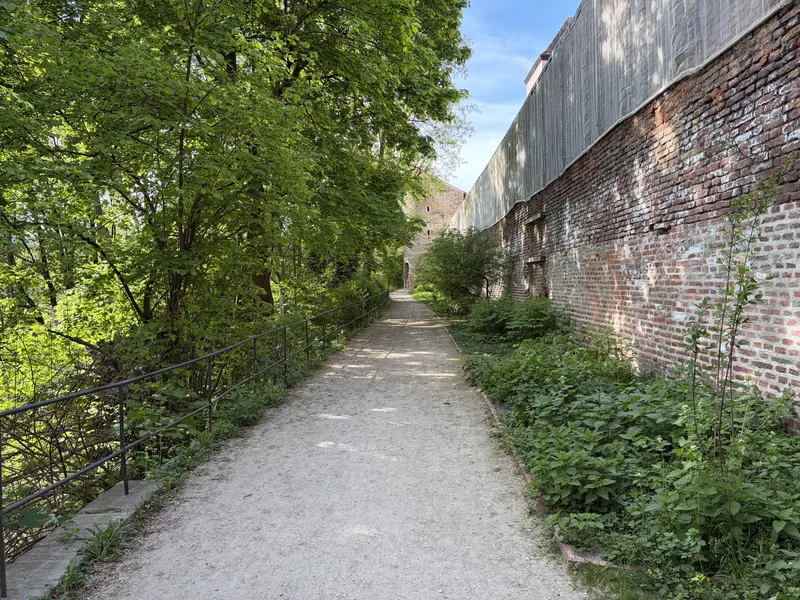
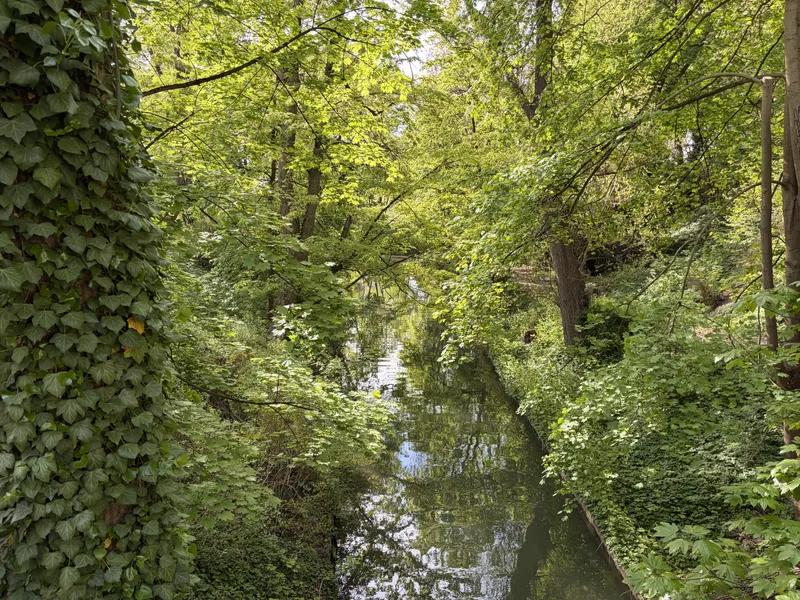
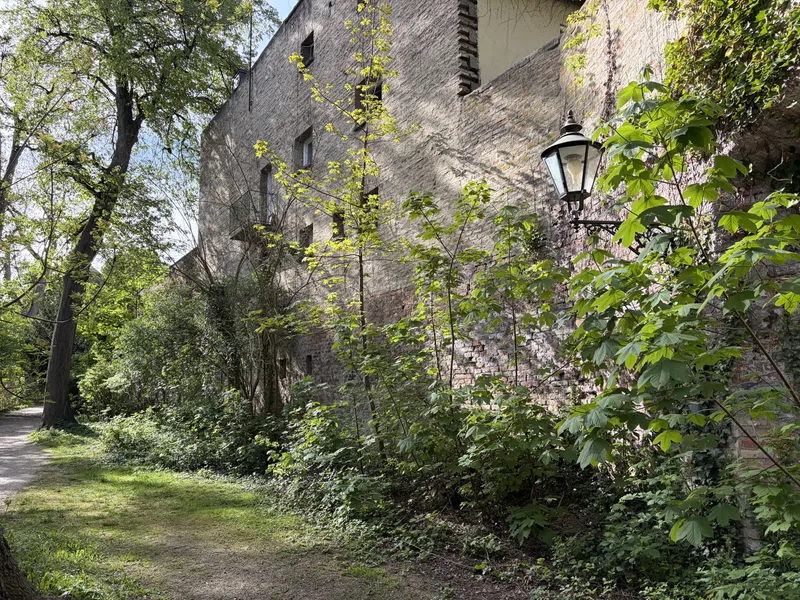
Moat and Gallusplatz
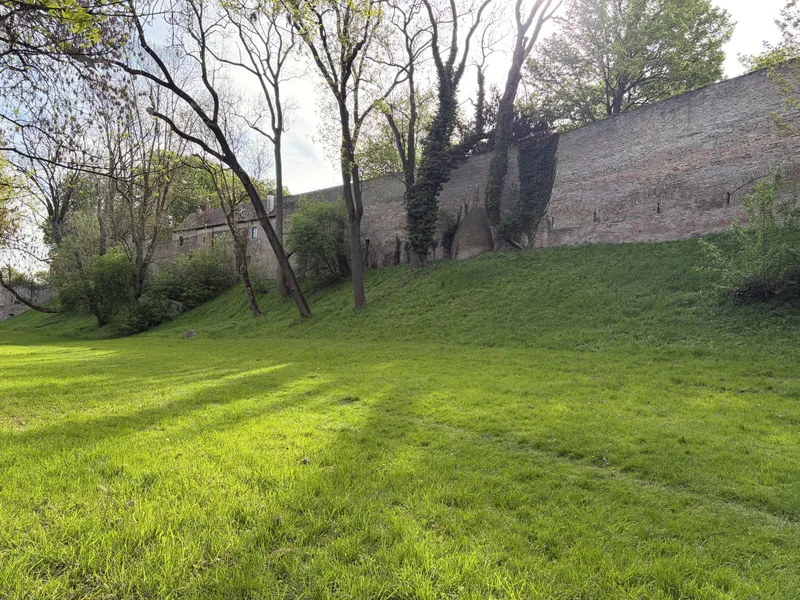
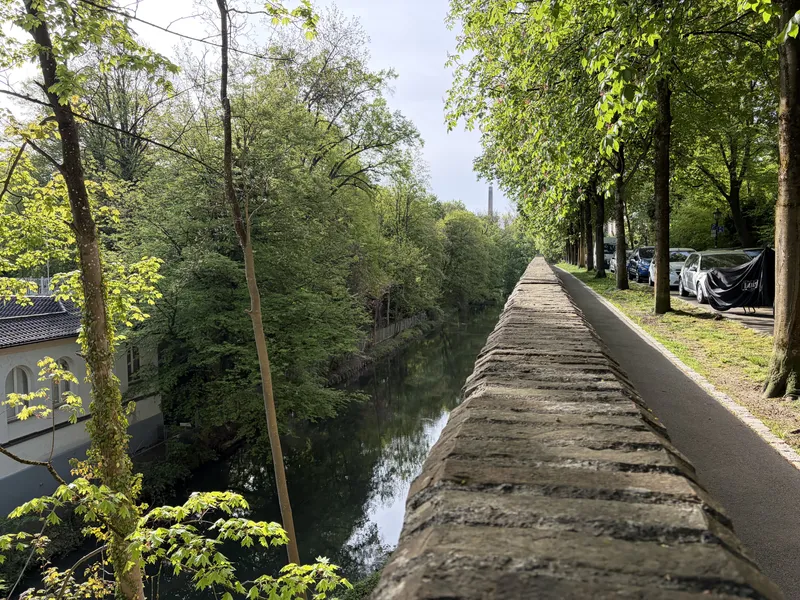
Around the Gallusplatz the path runs right along the city wall. Ivy covers the bricks, and next to it a narrow moat winds through the green belt. Here you can experience the fortifications in peace and quiet, surrounded by greenery.
Your route
The places are spread around the old town. Cycling is a good way to get from one to the next, and you can hire a bike at many stations in the city.
- The Rotes Tor lies in the closed-off area of the open-air theatre (Freilichtbühne) and is only accessible from there to authorised people.
- Towers such as the Wertachbrucker Tor or the Fünffingerlesturm can only be visited on guided tours or on opening days.
- The Bastion Lueginsland is a good place for a break in the greenery.